
History of ITOCHU Corporation
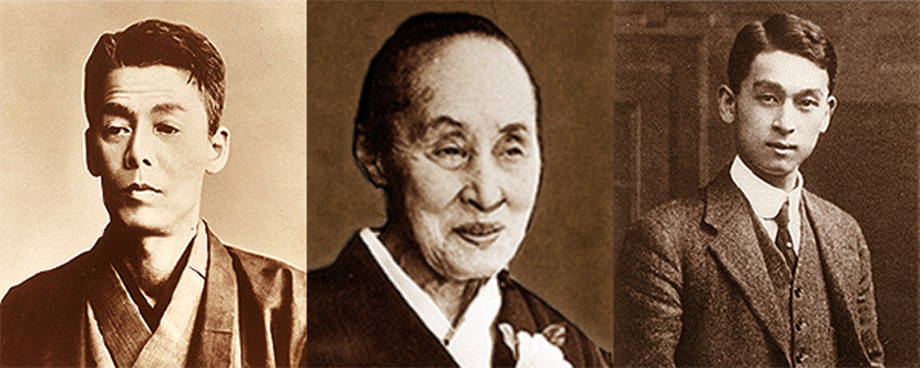
Scroll
| Year | ITOCHU History |
|---|---|
| 1858 | ITOCHU s founder, Chubei Itoh, began his business operations with flax. (Foundation of ITOCHU Corporation). When Chubei Itoh was 15 years old, he began trading flax as an itinerant merchant, traveling to Osaka and Kishu. The following year, he traveled to Nagasaki via Okayama, Hiroshima, and Shimonoseki. At that time, Japan signed the Treaty of Amity and Commerce with five countries, namely the United States, the United Kingdom, France, Russia, and the Netherlands, which marked the beginning of an era of free trade. The sight of foreigners, warships, and foreign trading posts surprised Chubei and aroused his curiosity. He became convinced of the unlimited potential of trade. ¿What is itinerant trade? |
| 1872 | Chubei Itoh establishes the curtain shop. “Benchu” in Osaka. Chubei opened Benchu, a fabric store in Honmachi 2-chome, Higashi-ku, Osaka, east of Nakahashisuji. Benchu mainly sold linen and fabrics from the Bino and Kanto regions. At that time, the Fushimi-machi area was the center of fabric wholesalers, while Honmachi attracted many secondhand clothing merchants. Despite this, when choosing the location for his business in Osaka, Chubei Itoh opted for Honmachi, anticipating the future development of the area. It is said that he chose Honmachi because it was accessible by road from Kawaguchi-cho, where ships could dock, and because the cost of land was less than half that of Fushimi-machi. |
| 1884 | Benchu expanded and changed its name to “Itoh Honten” (Itoh headquarters). |
| 1893 | Chubei Itoh establishes Itoh Itomise (a yarn and wool store), which is the origin of ITOCHU. ![[Photo]](https://www.itochu.com.mx/wp-content/themes/itochu/assets/img/ab01_im07.jpg)
Chubei opened Itoh Itomise, a wholesale cotton yarn store, in Azuchi-cho 2-chome, Higashi-ku, Osaka. Under the leadership of Chubei Itoh I, the general manager, the store started with ten employees, including a deputy general manager, a manager, and an assistant manager. Itoh Itomise adopted a number of management systems that were revolutionary at the time, such as codifying the distribution of profits among three stakeholders, introducing Western accounting, and publishing Jitsugyo, a monthly business magazine (which became a leading magazine in the textile industry and some copies of which were sold to the public). Thanks to these initiatives, Chubei developed a foundation of mutual trust between the store manager and the workers and achieved efficient management. |
| 1914 | Itoh Itomise reorganizes under the name C. Itoh & Co. |
| 1918 | C. Itoh & Co. becomes a public corporation—C. Itoh & Co., Ltd. |
| 1928 | The CI logo |
| 1941 | Sanko Kabushiki Kaisha, Ltd. is established through the merger of C. Itoh & Co., Marubeni Shoten Ltd., and Kishimoto Shoten Ltd. |
| 1944 | Sanko merges with Daido Boeki Kaisha, Ltd. and Kureha Cotton Spinning Co., Ltd. to form Daiken Co., Ltd. |
| 1949 | Daiken Co., Ltd., a company created from the merger of trading and manufacturing companies during World War II, is divided into C. Itoh & Co., Ltd., Kureha Cotton Spinning Co., Ltd., Marubeni Co., Ltd., and Amagasaki Nail Works, Ltd. |
| 1950 | The company is listed on the Osaka Stock Exchange and the Tokyo Stock Exchange. |
| 1952 | C. Itoh & Co. (America) (currently ITOCHU International Inc.). |
| 1957 | The company completes construction of the new Tokyo branch building (located at 2-chome, Nihonbashi Honcho, Chuo-ku, Tokyo). |
| 1967 | The Company renames the Tokyo Branch Office the Tokyo Head Office, to join the Osaka Head Office in a dual head-office structure. |
| 1969 | To commemorate the 100th anniversary of its founding, the company inaugurates the new C. Itoh headquarters building in Osaka. ![[Photo]](https://www.itochu.com.mx/wp-content/themes/itochu/assets/img/ab76_im06.jpg)
On April 25, 1969, the ceremony commemorating the 100th anniversary of ITOCHU s founding was held in the conference room on the 13th floor. The corporate anthem, “Cover the World,” was performed, and the corporate slogan, “C. Itoh covers the world,” and corporate motto, “Idea and Challenge,” were announced. |
| 1971 | The company is collaborating in the drafting of a basic cooperation agreement between General Motors Corporation of the United States and Isuzu Motors, Ltd. of Japan. |
| 1972 | The Chinese government welcomes C. Itoh as a friendly trading company, the first such recognition given to a Japanese company. sogo shosha. ITOCHU Corporation entered a period of growth in the 1970s. The company s long-held vision of “Improving non-textile businesses: diversification” finally became a reality, and it rapidly expanded its operations as a general trading company. ITOCHU Corporation was the first general trading company to establish business relations with China. On December 14, 1971, it publicly announced that it would comply with the “Four Conditions for Trade between Japan and China,” and then created a section within the company dedicated to China and launched initiatives to actively promote trade. When a mission led by then-President Echigo visited China in March 1972, ITOCHU was officially recognized as a friendly trading company by the Chinese government and continued to play an important role in promoting friendship and trade between Japan and China. Shortly after this designation, on September 29, 1972, Japanese Prime Minister Kakuei Tanaka achieved the normalization of diplomatic relations between Japan and China. |
| 1974 | The ITOCHU Foundation was established to commemorate the 25th anniversary of the company s rebirth after World War II. ITOCHU Corporation established the ITOCHU Foundation to commemorate the 25th anniversary of its postwar rebirth, launching social action programs to promote the healthy development of young people. |
| 1977 | The company acquires Ataka. & Co., Ltd., a sogo shosha primarily engaged in the steel business. |
| 1980 | The company completes construction of a new building for its headquarters in the Aoyama district of Tokyo. |
| 1989 | Japan s first commercial communications satellite, the ‘JCSAT-1’, was successfully launched. |
| 1992 | The implementation of ITOCHU s new CI program led to a new expression of the official corporate ideals, the adoption of the current English name, and the creation of a new corporate logo. ![[Photo]](https://www.itochu.com.mx/wp-content/themes/itochu/assets/img/ab76_im07.jpg)
ITOCHU Corporation s new English name and official corporate ideals were announced on June 1, 1992. Prior to this, with the participation of all employees, the New CI program was conducted for one year to determine a corporate name and philosophy suitable for a diversified international company. As a result, ITOCHU Corporation was selected as the English name for the company, while the Japanese name remained unchanged. The company also established «The ITOCHU Creed» and «ITOCHU Way" as its corporate philosophy, focusing on «ITOCHU committed to global good». On October 1, new corporate symbols were also unveiled, including a new corporate logo. |
| 1996 | The ITOCHU Group becomes the largest private shareholder in Sakhalin Oil and Gas Development. |
| 1997 | The system of division by companies is introduced. With the diversification of ITOCHU s operations in Japan and overseas and rapid changes in the management environment, the company recognized the need to adopt a more autonomous management approach, enabling greater agility through the delegation of authority and responsibility to its divisions. The concept of developing a “divisional company” system was created. Consequently, a review committee was established in 1995, and the system was adopted in fiscal 1997. The main objectives of the system were, first, to create an optimal management system with independent management by divisional companies (creating a system tailored to the characteristics of the companies, enabling rapid decision-making through bold decentralization of authority, and building a more sophisticated management system based on performance and consolidated balance sheets); second, to establish a small and efficient headquarters; and third, to achieve the minimum necessary control in line with the decentralization of authority. With the adoption of this new approach, ITOCHU sought to strengthen its performance and operations while bolstering its profits. |
| 1998 | ITOCHU Group acquires shares in FamilyMart Co., Ltd. |
| 1999 | The position of "Executive Officer". |
| 2001 | Marubeni-Itochu Steel Inc. |
| 2002 | Opening of the Chubei Itoh Memorial Museum. |
| 2005 | The company launches its new medium-term management plan. “Frontier—2006: A shift towards aggressive business practices and improved sound management.” |
| 2006 | The company launches the ITOCHU DNA Project, a project for reengineering business processes. |
| 2007 | The company launches its new medium-term management plan “Frontier+ 2008: Increasing corporate value on the global stage.” |
| 2008 | The company announces social contribution programs to mark its 150th anniversary. |
| 2009 | The company launches its new medium-term management plan “Frontiere 2010: Enhancing corporate value on the global stage, shaping the future.” |
| 2011 | The company launches its new medium-term management plan “New Deal 2012: Win, Cut, Prevent” |
| 2013 | The company launches its new medium-term management plan. “New agreement for 2014: with the goal of becoming the number one marketing company in sectors not related to natural resources.” |
| 2014 | The company formulated the corporate message I am one with infinite missions. |
| 2015 | Strategic alliance and equity participation with CITIC Limited (China) and Charoen Pokphand Group Company Limited (Thailand). |
| 2018 | The company launches its new medium-term management plan “New agreement for 2020: ITOCHU: INFINITE MISSIONS: INNOVATION” |
| 2020 | The company reviewed ITOCHU s mission to "Sampo-Yoshi", and redefined the corporate message. “I Am One with Infinite Missions” as a guide to conduct. |
| 2021 | The company launches its new medium-term management plan “New Treaty 2023”. |
| 2024 | The company announces its management policy. “The new agreement”. |
![[CI]](https://www.itochu.com.mx/wp-content/themes/itochu/assets/img/ab76_ic01.png) is designed for use outside Japan.
is designed for use outside Japan.![[abre nueva ventanas]](https://www.itochu.com.mx/wp-content/themes/itochu/assets/img/com_blank_ic03.png)